publications
publications by categories in reversed chronological order. generated by jekyll-scholar.
2026
-
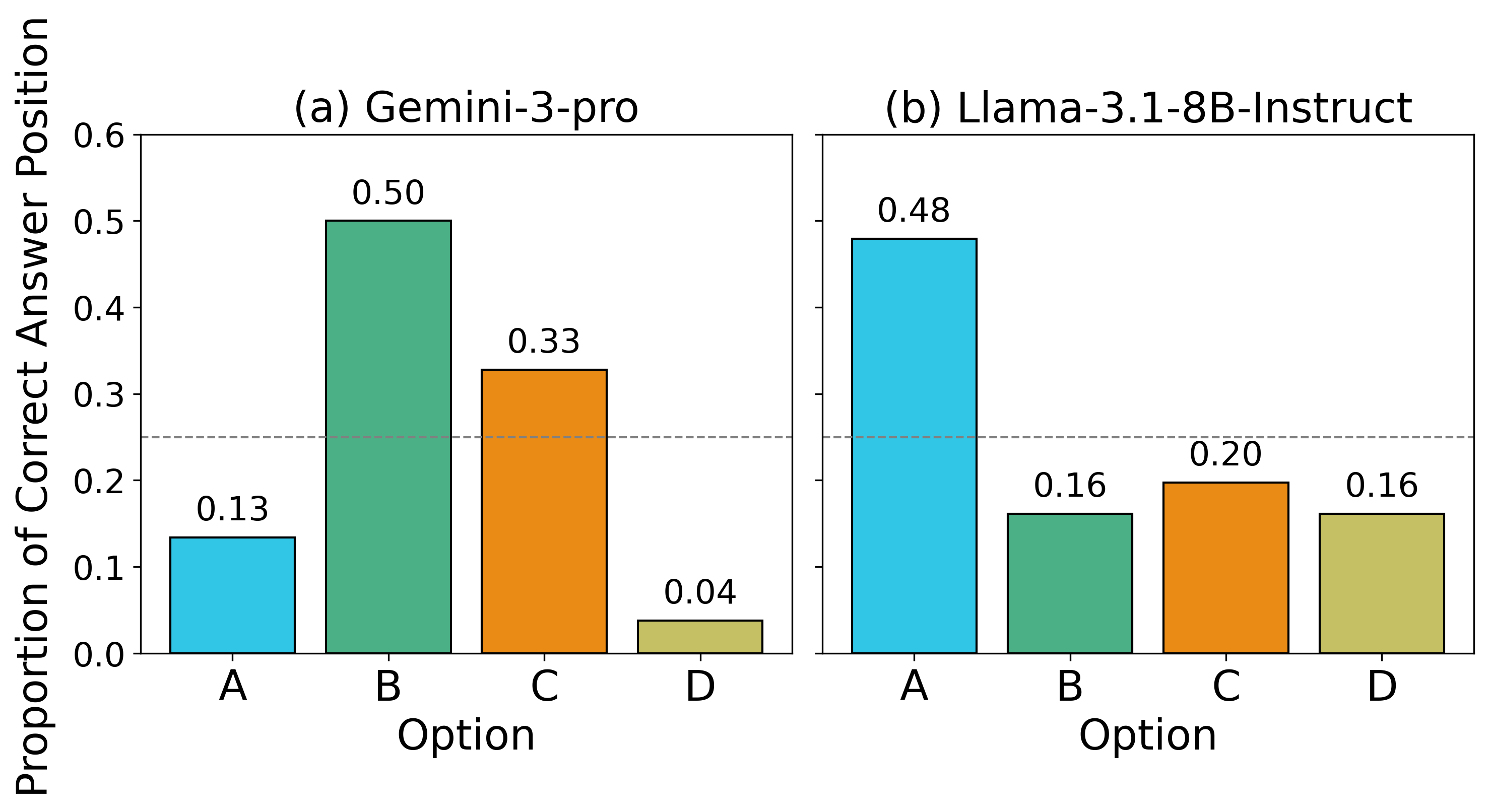 Do Large Language Models Plan Answer Positions? Position Bias in Multiple-Choice Question GenerationXuemei Tang, Xufeng Duan, and Zhenguang G. CaiMay 2026arXiv:2605.01846 [cs.CL]
Large language models (LLMs) are increasingly used to generate multiple-choice questions (MCQs), where correct answers should ideally be uniformly distributed across options. However, we observe that LLMs exhibit systematic position biases during generation. Through extensive experiments with 10 LLMs and 5 vision-language models (VLMs) on three MCQ generation tasks, we show that these biases are structured, with similar patterns emerging within model families. To investigate the underlying mechanisms, we conduct probing experiments and find that hidden representations in the question stem encode predictive signals of the correct answer position, suggesting that answer position may be implicitly planned during generation. Building on this insight, we apply activation steering to manipulate internal representations and influence answer position. Our results show that steering can partially control positional preferences and substantially shift answer position distributions. Our findings provide a practical framework for studying implicit positional planning in LLMs and highlight the importance of controllable generation for reliable MCQ construction and evaluation.
-
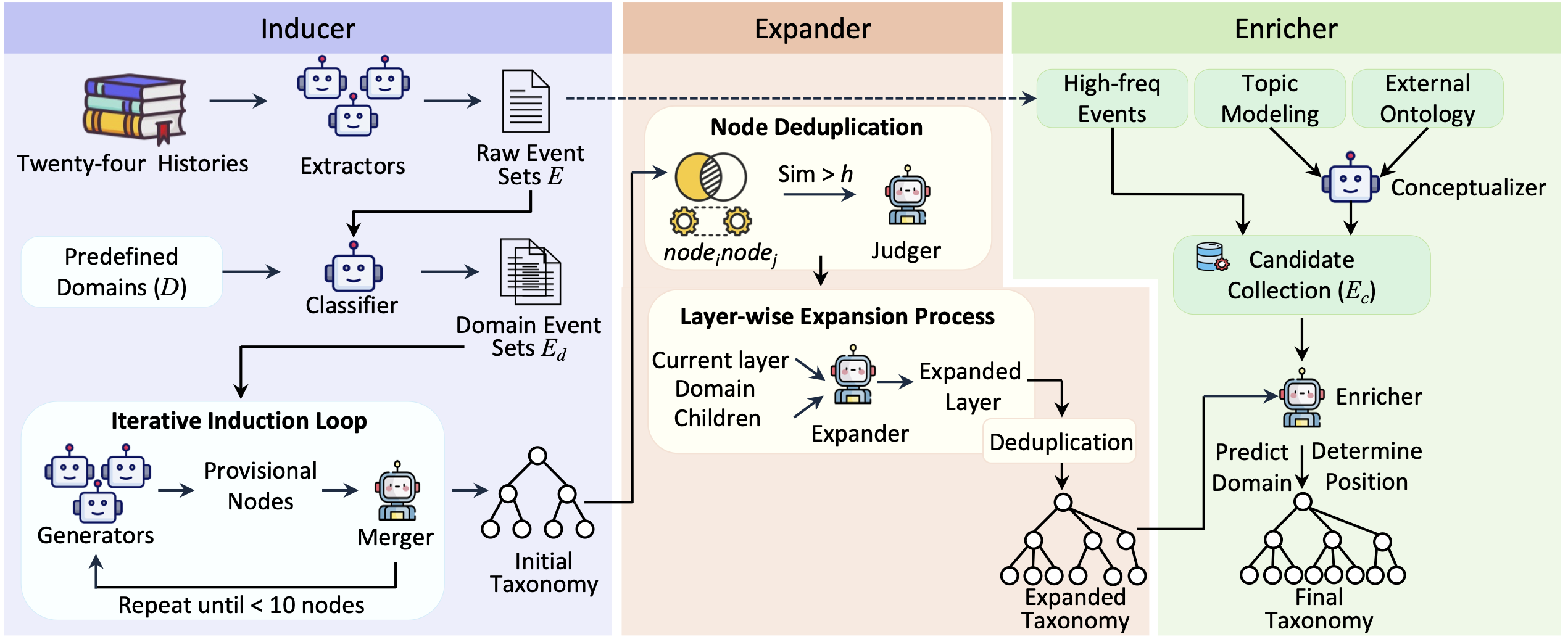 CHisAgent: A Multi-Agent Framework for Event Taxonomy Construction in Ancient Chinese Cultural SystemsXuemei Tang, Chengxi Yan, Jinghang Gu, and 1 more authorJan 2026arXiv:2601.05520 [cs]
Despite strong performance on many tasks, large language models (LLMs) show limited ability in historical and cultural reasoning, particularly in non-English contexts such as Chinese history. Taxonomic structures offer an effective mechanism to organize historical knowledge and improve understanding. However, manual taxonomy construction is costly and difficult to scale. Therefore, we propose textbfCHisAgent, a multi-agent LLM framework for historical taxonomy construction in ancient Chinese contexts. CHisAgent decomposes taxonomy construction into three role-specialized stages: a bottom-up textitInducer that derives an initial hierarchy from raw historical corpora, a top-down textitExpander that introduces missing intermediate concepts using LLM world knowledge, and an evidence-guided textitEnricher that integrates external structured historical resources to ensure faithfulness. Using the textitTwenty-Four Histories, we construct a large-scale, domain-aware event taxonomy covering politics, military, diplomacy, and social life in ancient China. Extensive reference-free and reference-based evaluations demonstrate improved structural coherence and coverage, while further analysis shows that the resulting taxonomy supports cross-cultural alignment.
-
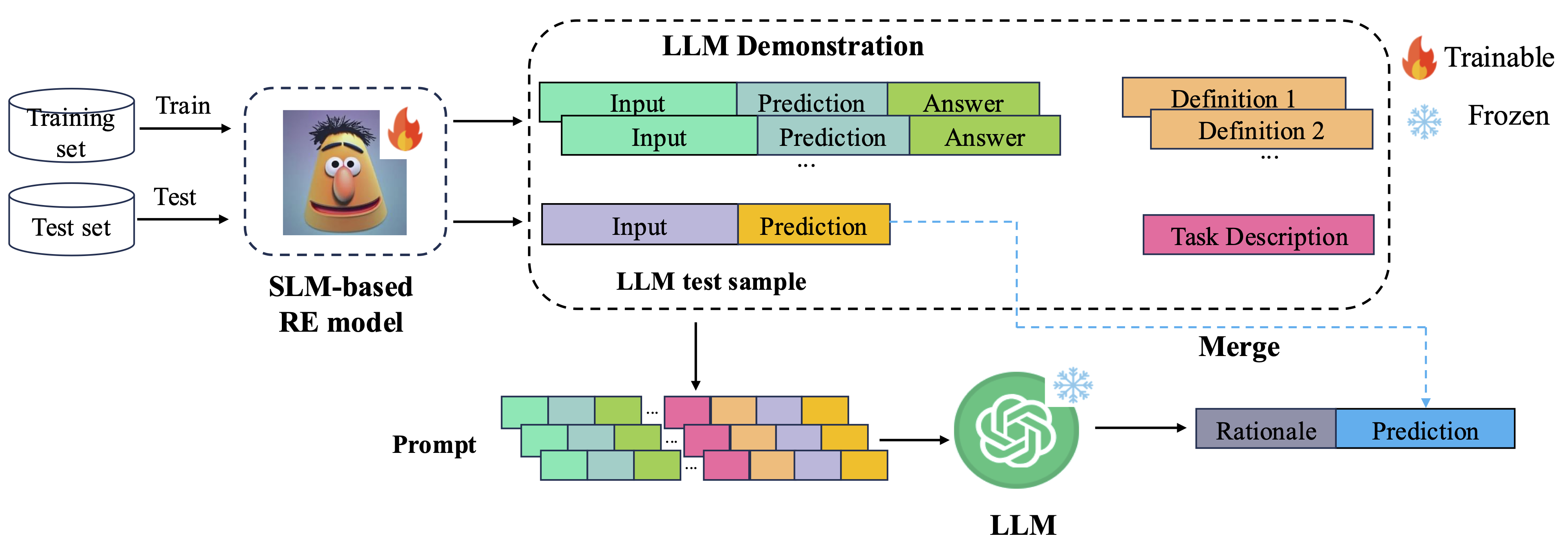 Language model collaboration for relation extraction from classical Chinese historical documentsXuemei Tang, Linxu Wang, and Jun WangInformation Processing & Management, Jan 2026
Classical Chinese historical documents are invaluable for Chinese cultural heritage and history research, while they remain underexplored within natural language processing (NLP) due to limited annotated resources and linguistic evolution spanning thousands of years. Addressing the challenges presented by this low annotated resource domain, we develop a relation extraction (RE) corpus that preserves the characteristics of classical Chinese documents. Utilizing this corpus, we explore RE in classical Chinese documents through a collaboration framework that integrates small pre-trained language models (SLMs), such as BERT, with large language models (LLMs) like GPT-3.5. SLMs can quickly adapt to specific tasks given sufficient supervised data but often struggle with few-shot scenarios. Conversely, LLMs leverage broad domain knowledge to handle few-shot challenges but face limitations when processing lengthy input sequences. Combining these complementary strengths, we propose a “train-guide-predict” collaboration framework, where a small language model corporate with a large language model (SLCoLM). This framework enables SLMs to capture task-specific knowledge for head relation categories, while LLMs offer insights for few-shot relation categories. Experimental results show that SLCoLM outperforms both fine-tuned SLMs and LLMs using in-context learning (ICL). It also helps mitigate the long-tail problem in classical Chinese historical documents.
2025
-
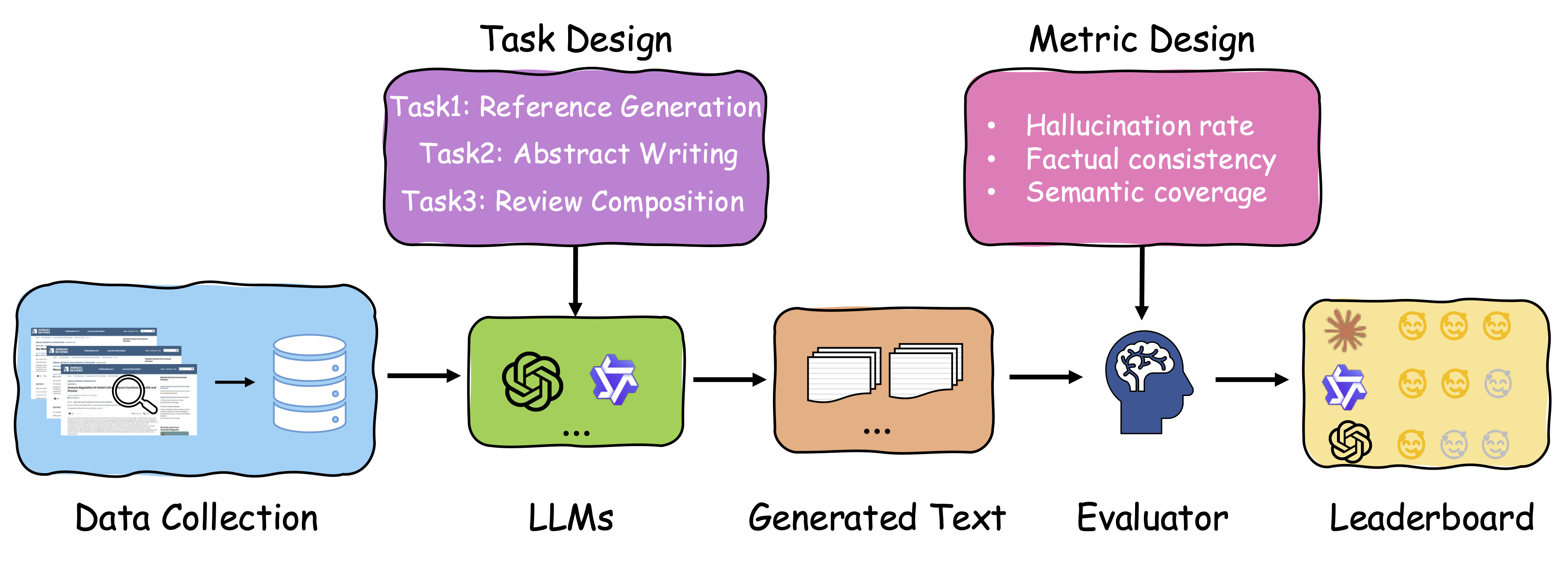 Large Language Models for Automated Literature Review: An Evaluation of Reference Generation, Abstract Writing, and Review CompositionXuemei Tang, Xufeng Duan, and Zhenguang CaiIn EMNLP 2025, Nov 2025
Large language models (LLMs) have emerged as a potential solution to automate the complex processes involved in writing literature reviews, such as literature collection, organization, and summarization. However, it is yet unclear how good LLMs are at automating comprehensive and reliable literature reviews. This study introduces a framework to automatically evaluate the performance of LLMs in three key tasks of literature review writing: reference generation, abstract writing, and literature review composition. We introduce multidimensional evaluation metrics that assess the hallucination rates in generated references and measure the semantic coverage and factual consistency of the literature summaries and compositions against human-written counterparts. The experimental results reveal that even the most advanced models still generate hallucinated references, despite recent progress. Moreover, we observe that the performance of different models varies across disciplines when it comes to writing literature reviews. These findings highlight the need for further research and development to improve the reliability of LLMs in automating academic literature reviews. The dataset and code used in this study are publicly available in our GitHub repository .
-
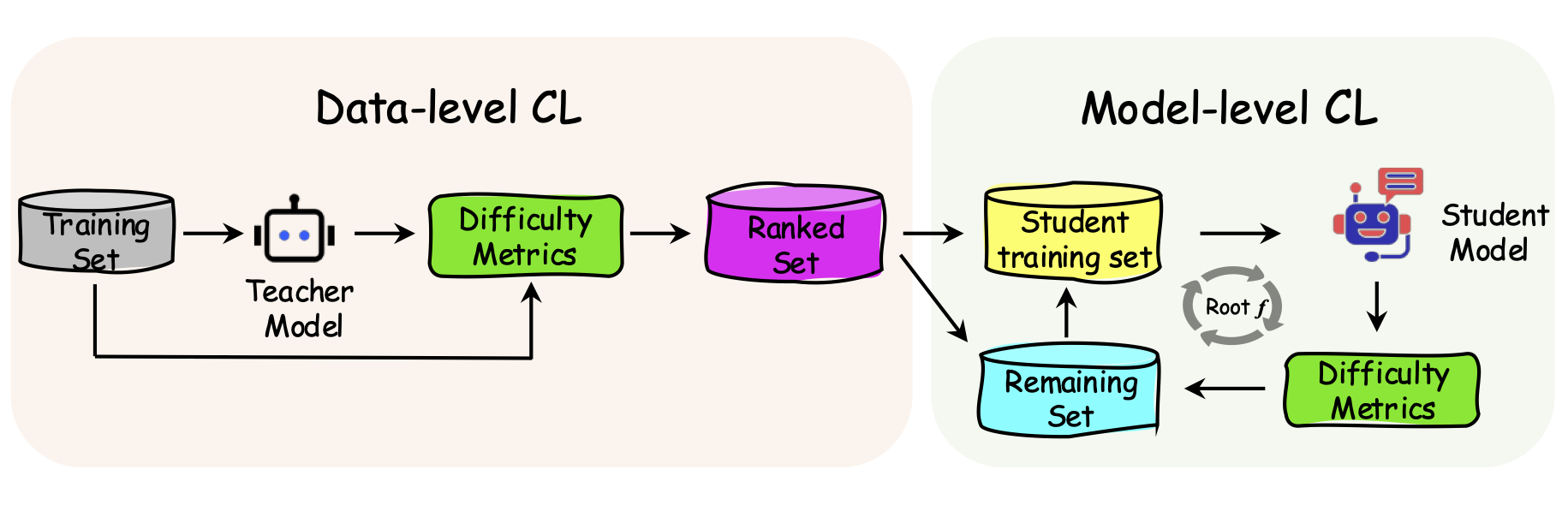 An Effective Incorporating Heterogeneous Knowledge Curriculum Learning for Sequence LabelingXuemei Tang, Jun Wang, Qi Su, and 2 more authorsIn ACL 2025 (Volume 2: Short Papers), Jul 2025
Sequence labeling models often benefit from incorporating external knowledge. However, this practice introduces data heterogeneity and complicates the model with additional modules, leading to increased expenses for training a high-performing model. To address this challenge, we propose a dual-stage curriculum learning (DCL) framework specifically designed for sequence labeling tasks. The DCL framework enhances training by gradually introducing data instances from easy to hard. Additionally, we introduce a dynamic metric for evaluating the difficulty levels of sequence labeling tasks. Experiments on several sequence labeling datasets show that our model enhances performance and accelerates training, mitigating the slow training issue of complex models.
2024
-
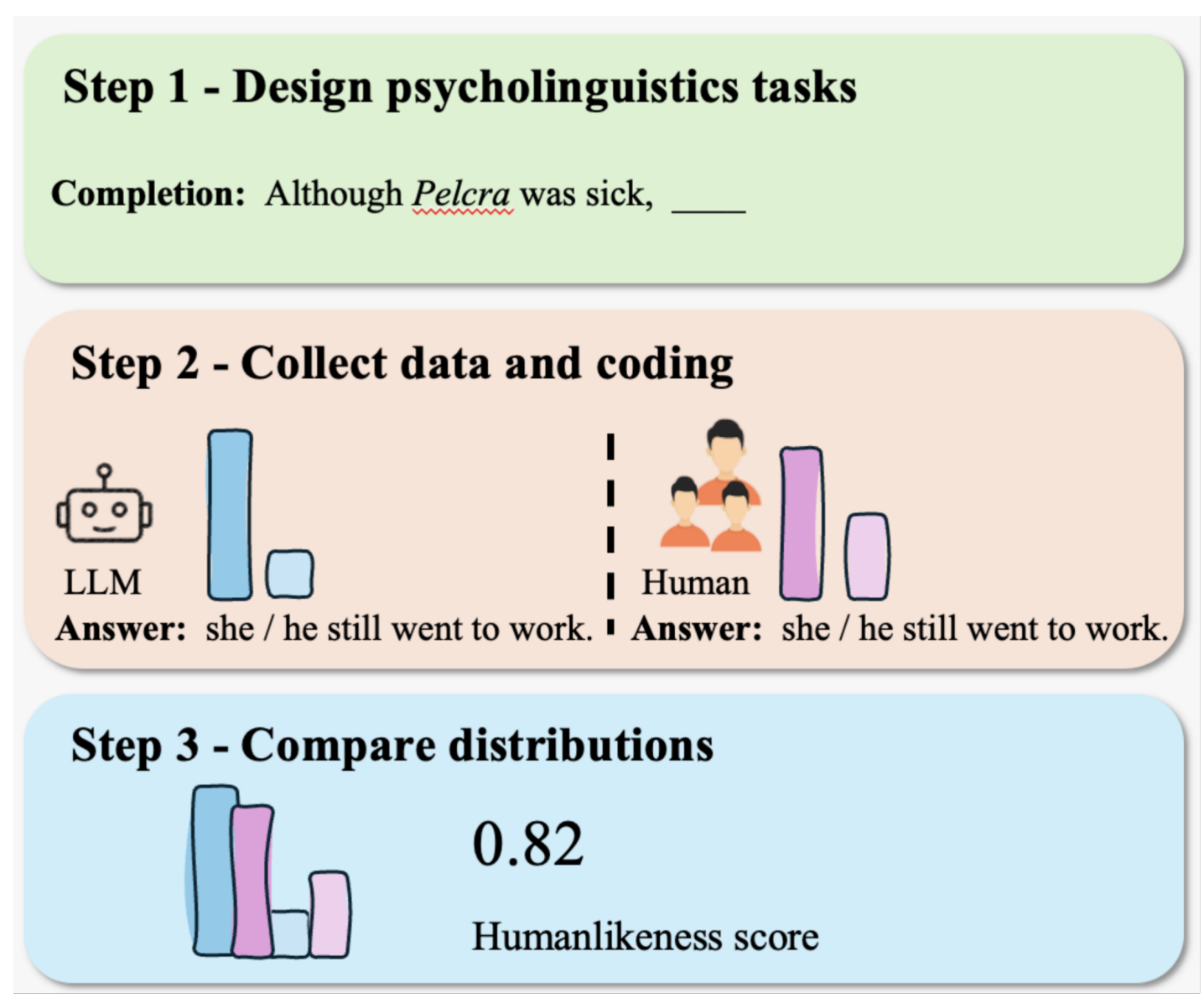 HLB: Benchmarking LLMs’ Humanlikeness in Language UseXufeng Duan, Bei Xiao, Xuemei Tang, and 1 more authorSep 2024arXiv:2409.15890 [cs]
As synthetic data becomes increasingly prevalent in training language models, particularly through generated dialogue, concerns have emerged that these models may deviate from authentic human language patterns, potentially losing the richness and creativity inherent in human communication. This highlights the critical need to assess the humanlikeness of language models in real-world language use. In this paper, we present a comprehensive humanlikeness benchmark (HLB) evaluating 20 large language models (LLMs) using 10 psycholinguistic experiments designed to probe core linguistic aspects, including sound, word, syntax, semantics, and discourse (see https://huggingface.co/spaces/XufengDuan/HumanLikeness). To anchor these comparisons, we collected responses from over 2,000 human participants and compared them to outputs from the LLMs in these experiments. For rigorous evaluation, we developed a coding algorithm that accurately identified language use patterns, enabling the extraction of response distributions for each task. By comparing the response distributions between human participants and LLMs, we quantified humanlikeness through distributional similarity. Our results reveal fine-grained differences in how well LLMs replicate human responses across various linguistic levels. Importantly, we found that improvements in other performance metrics did not necessarily lead to greater humanlikeness, and in some cases, even resulted in a decline. By introducing psycholinguistic methods to model evaluation, this benchmark offers the first framework for systematically assessing the humanlikeness of LLMs in language use.
-
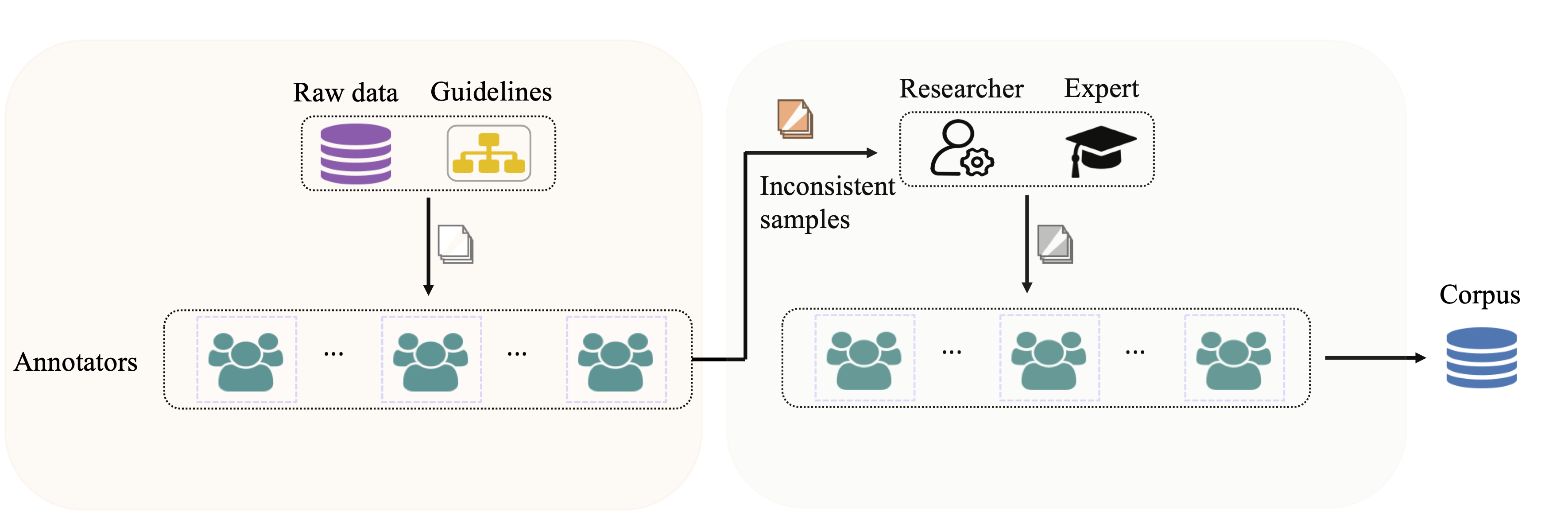 CHisIEC: An Information Extraction Corpus for Ancient Chinese HistoryXuemei Tang, Qi Su, Jun Wang, and 1 more authorIn LREC-COLING 2024, May 2024
Natural Language Processing (NLP) plays a pivotal role in the realm of Digital Humanities (DH) and serves as the cornerstone for advancing the structural analysis of historical and cultural heritage texts. This is particularly true for the domains of named entity recognition (NER) and relation extraction (RE). In our commitment to expediting ancient history and culture, we present the “Chinese Historical Information Extraction Corpus”(CHisIEC). CHisIEC is a meticulously curated dataset designed to develop and evaluate NER and RE tasks, offering a resource to facilitate research in the field. Spanning a remarkable historical timeline encompassing data from 13 dynasties spanning over 1830 years, CHisIEC epitomizes the extensive temporal range and text heterogeneity inherent in Chinese historical documents. The dataset encompasses four distinct entity types and twelve relation types, resulting in a meticulously labeled dataset comprising 14,194 entities and 8,609 relations. To establish the robustness and versatility of our dataset, we have undertaken comprehensive experimentation involving models of various sizes and paradigms. Additionally, we have evaluated the capabilities of Large Language Models (LLMs) in the context of tasks related to ancient Chinese history. The dataset and code are available at https://github.com/tangxuemei1995/CHisIEC.